
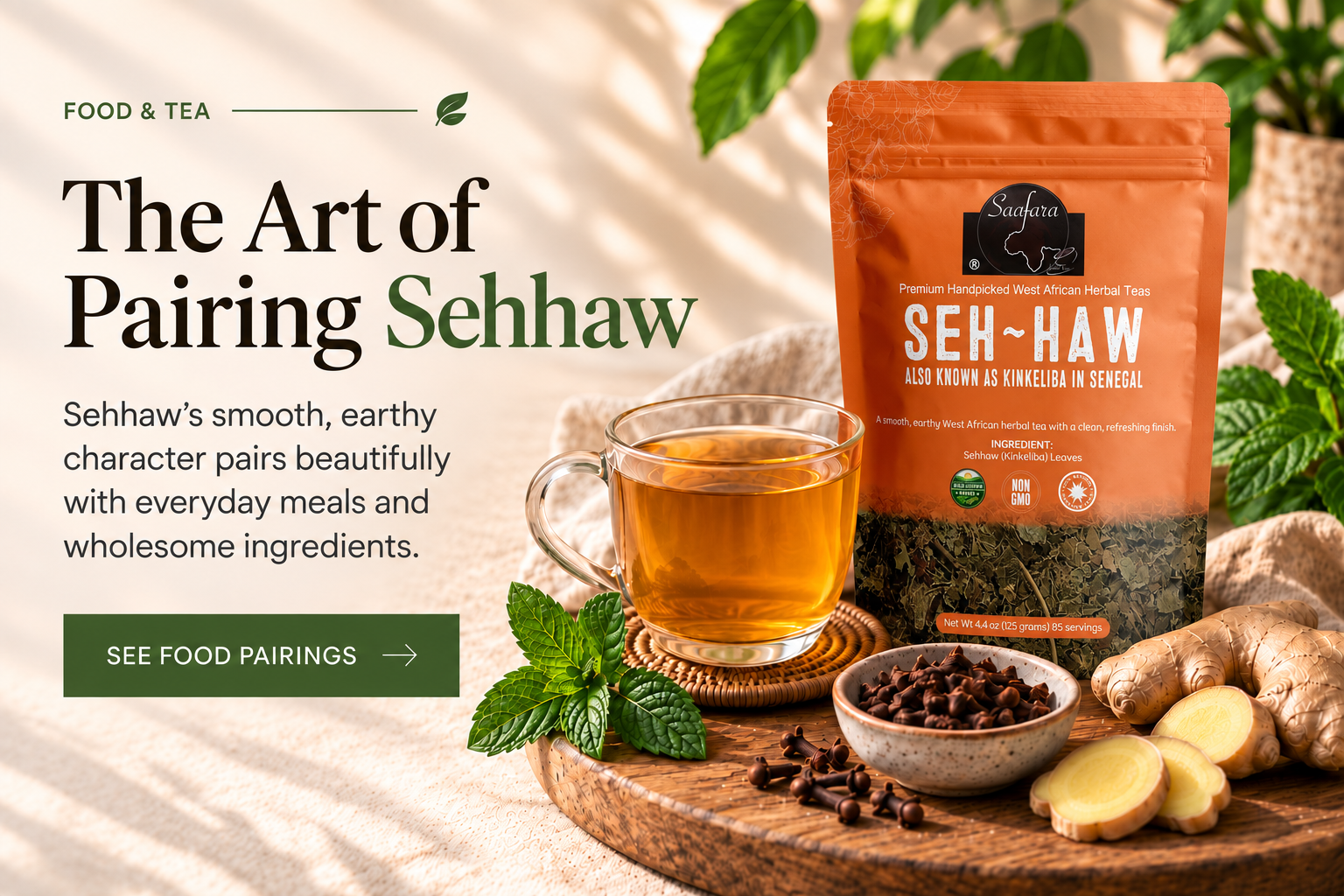
Sehhaw (Kinkeliba): A West African Herbal Tea With a Rich Cultural Story
Long before herbal tea became a wellness trend, Sehhaw—widely known as Kinkeliba and botanically as Combretum micranthum—was already part of everyday life across West Africa. In Senegal, Mali, Burkina Faso and neighboring regions, its leaves have long been dried, bundled, steeped and shared as a simple bush tea.
A tea rooted in place
Sehhaw grows naturally across the West African savanna and Sahel. Scientific literature describes it as a non-domesticated shrub whose leaves are traditionally harvested from wild populations and prepared as an herbal infusion. That matters because the flavor is closely connected to the landscape: earthy, gently nutty, green-brown in the cup, and naturally caffeine-free.
For many families, Kinkeliba is not an exotic ingredient. It is familiar. It is the kind of infusion that can be brewed in the morning, poured after a meal, or served to a guest without ceremony. Its importance comes from repetition—generation after generation knowing the plant, the aroma and the taste.
Why the name Kinkeliba carries weight
Ethnobotanical research notes that Kinkeliba became so well known in parts of West Africa that the name itself came to be associated with traditional herbal remedies. Modern studies have also identified naturally occurring flavonoids and other plant compounds in the leaves. At Saafara, however, we prefer to introduce Sehhaw first as what it has always been to many people: a traditional West African herbal tea.
What does Sehhaw taste like?
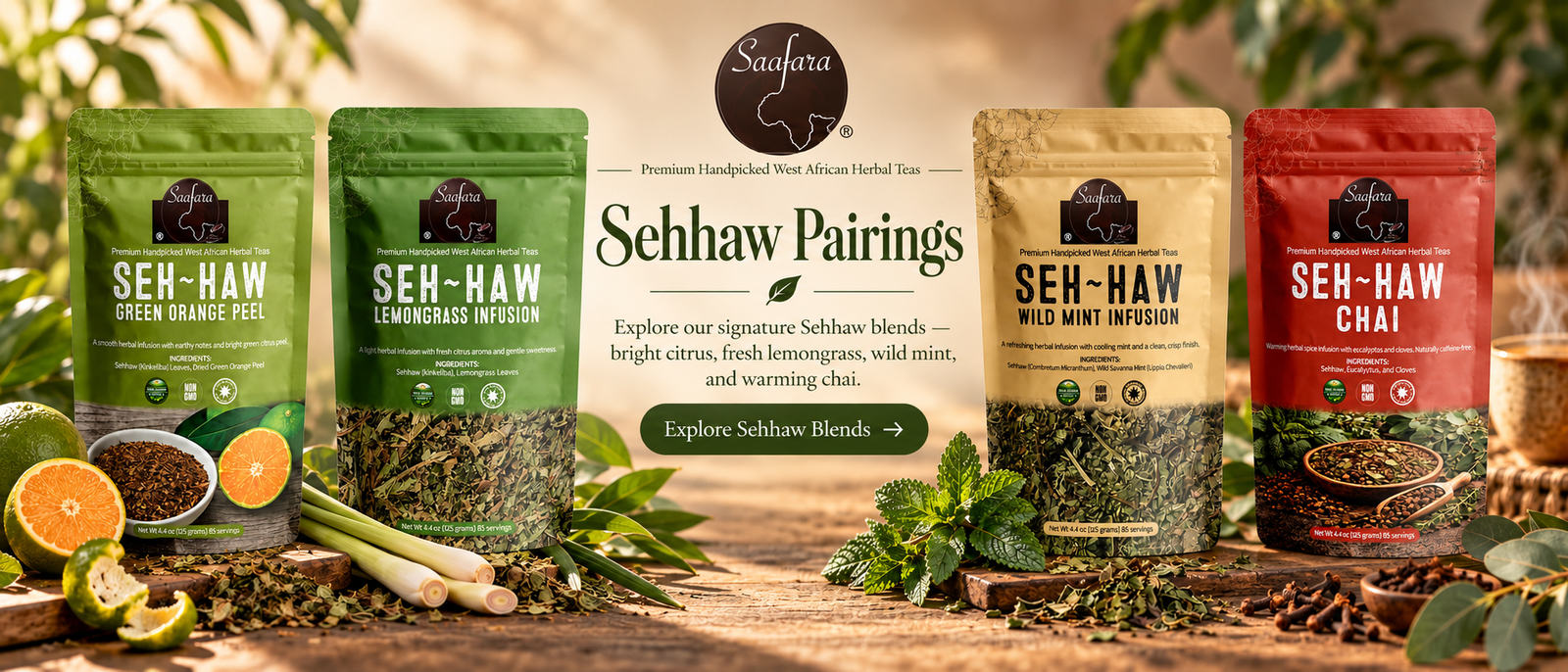
Expect a smooth, earthy cup with a dry, clean finish and subtle roasted or nutty notes. It is very different from black tea and green tea, and that difference is part of its appeal. Because the base is mild, Sehhaw also pairs beautifully with aromatic ingredients such as wild mint, lemongrass, citrus peel, eucalyptus and cloves.
From Senegal to a modern tea shelf
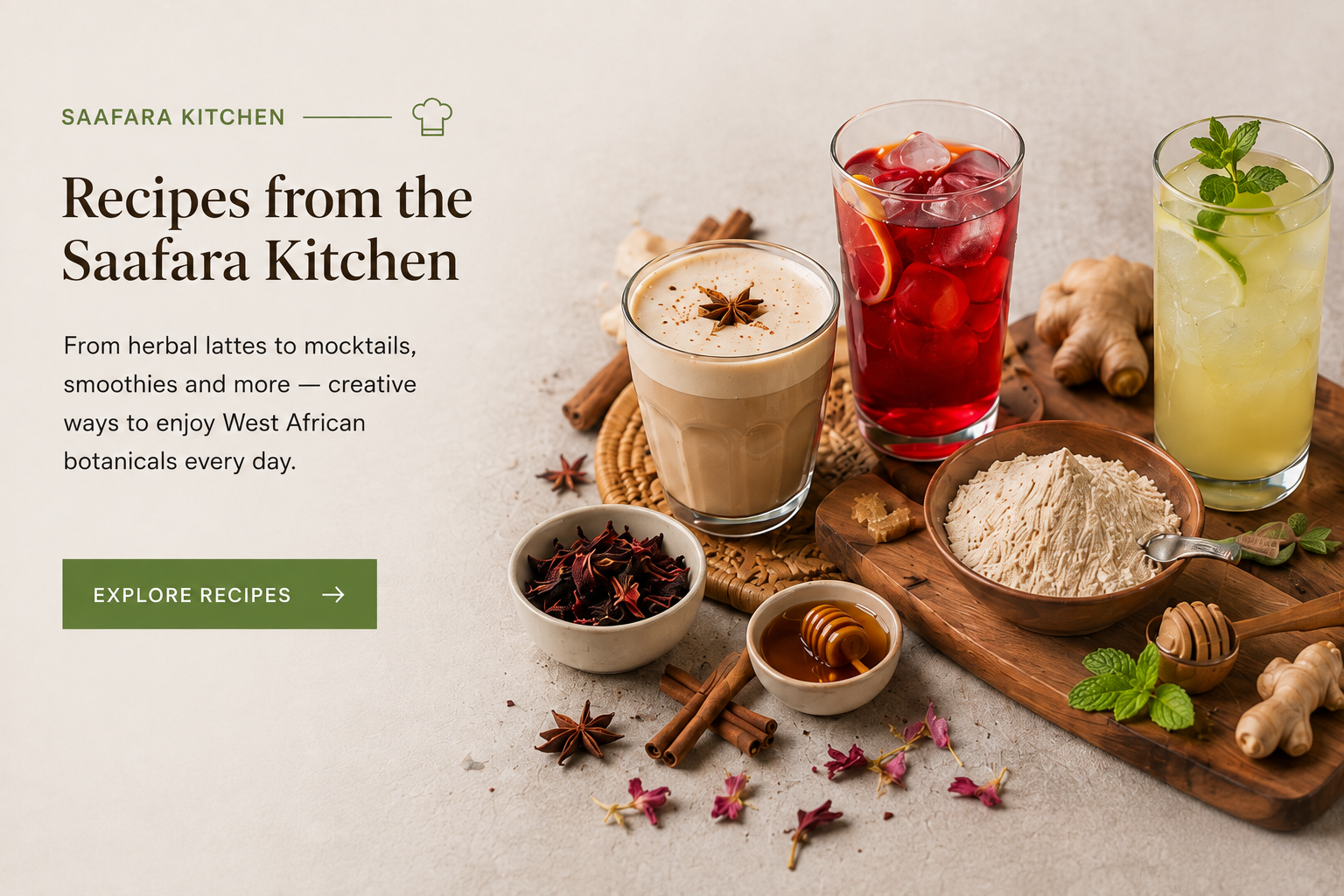
One of the most interesting things about Sehhaw is how easily it moves between tradition and modern tea culture. It can be brewed loose in a pot, prepared in a tea infuser, chilled over ice, or blended with botanicals. The format changes; the ingredient does not.
For tea drinkers who enjoy discovering origins beyond the familiar tea-growing regions of Asia, Sehhaw opens a different door: one into the herbal traditions of West Africa.
Explore: Saafara Herbal Teas and Sehhaw Blends.
Further reading
Bioactive polyphenols in kinkéliba tea · Review of African Combretum species
Pingback: Kinkeliba (Sehhaw): Senegal’s Traditional Herbal Tea – Saafara Herbal Teas