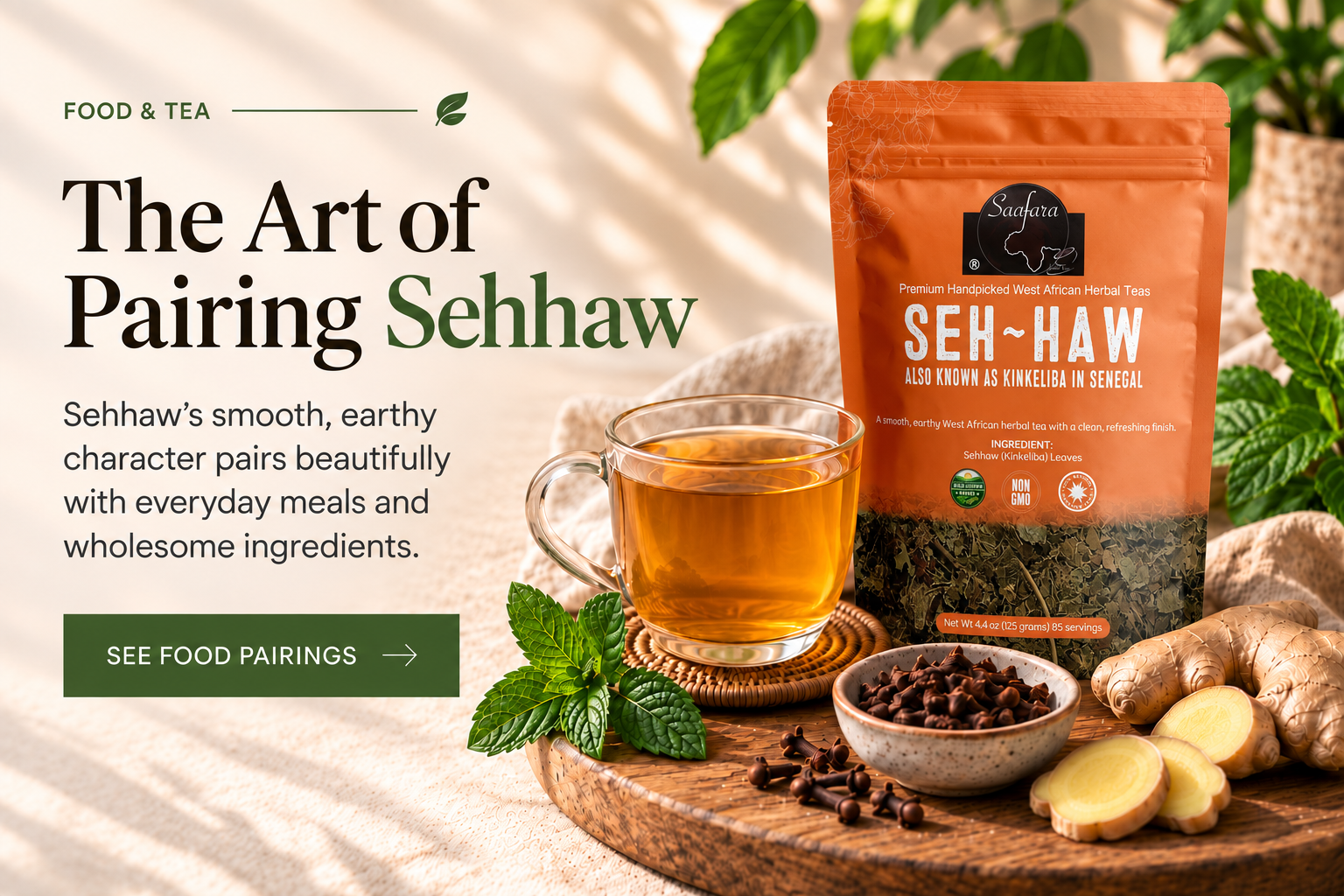
Kinkeliba (Sehhaw) Benefits: Blood Pressure, Blood Sugar & Tradition
Known in Senegal as Sehhaw and internationally as Kinkeliba, Combretum micranthum is a caffeine-free leaf infusion with a long place in West African daily life, and a growing body of scientific research. Its clear amber cup, gently earthy aroma, and clean finish make it easy to enjoy in the morning, after a meal, or whenever you want a quiet pause.
What is Kinkeliba?
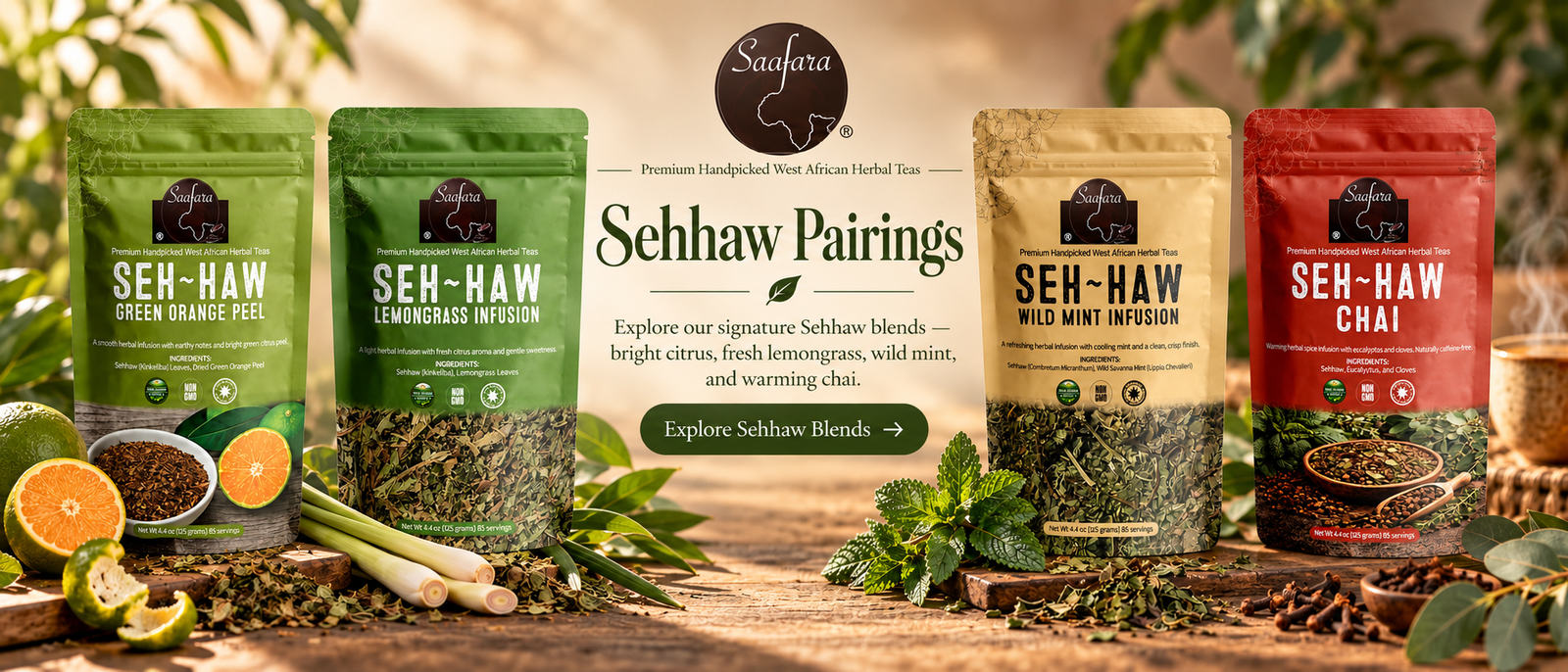
Kinkeliba is prepared from the dried leaves of Combretum micranthum, a shrub native to the Sahel and other parts of West Africa. In Senegal, the drink is commonly called Sehhaw. Families have brewed it for generations, and the tea remains closely connected with hospitality, conversation, and everyday routines.
Saafara sources this traditional botanical with respect for its origin and presents it as a naturally caffeine-free infusion with nothing artificial added.
Health benefits of Sehhaw (Kinkeliba)
Kinkeliba and blood pressure
Human clinical research suggests that Kinkeliba may help lower blood pressure. In a randomized four-week trial involving 125 adults with uncomplicated hypertension, participants receiving Kinkeliba leaf powder experienced an average reduction of 12.2 mmHg in systolic blood pressure and 5.0 mmHg in diastolic blood pressure. At the end of the study, 37% of the Kinkeliba group had reached normalized blood pressure.
A later six-month randomized clinical trial in Senegal followed 219 adults and tested Kinkeliba as both tablets and a brewed decoction made with 10 grams of leaves per day. The researchers reported a significant reduction in systolic blood pressure, with brewed preparations tending to perform slightly better than tablets. After six months, 51% of participants receiving Kinkeliba reached the study’s target of below 140/90 mmHg.
These are meaningful human findings. They do not mean that every cup will produce the same result, and Kinkeliba should not replace prescribed blood-pressure medication without guidance from a qualified healthcare professional.
Can Kinkeliba help lower blood sugar?
Early research suggests potential benefits for glucose metabolism. Researchers identified 13 polyphenol compounds in Kinkeliba leaves. In laboratory testing, Kinkeliba extracts reduced glucose production in liver-derived cells. In a mouse model, the extracts lowered plasma glucose in a dose-dependent manner and improved glucose tolerance after several weeks.
This blood-sugar research is promising, but it has not yet been confirmed in a human clinical trial. The careful conclusion is that Kinkeliba may support healthy glucose metabolism; it is too early to claim that drinking the tea treats diabetes. Anyone taking insulin or glucose-lowering medication should discuss regular Kinkeliba use with a healthcare professional and monitor blood sugar appropriately.
Polyphenols and antioxidant activity
Kinkeliba naturally contains plant compounds including epicatechin, epigallocatechin, vitexin, isovitexin, orientin, and related flavonoids. These polyphenols are one reason researchers continue to study the leaf’s antioxidant and metabolic activity.
Traditional digestive and diuretic use
Across West Africa, Kinkeliba has traditionally been consumed after meals and used as a digestive and mild diuretic infusion. This traditional knowledge is culturally important, although these uses have not all been established through large modern human trials.

What does Kinkeliba tea taste like?
The flavor is mild, earthy, and lightly woody, with a soft herbal finish. It is less sharp than many mint teas and can be enjoyed plain. A little honey or lemon also pairs beautifully with the leaf.
How to brew Sehhaw
- Use 1 to 2 teaspoons of dried leaves for each 8-ounce cup.
- Add freshly boiled water.
- Cover and steep for 7 to 10 minutes.
- Strain and enjoy warm, or chill it for a refreshing iced infusion.
For a stronger traditional-style brew, increase the amount of leaf or extend the steeping time. The six-month blood-pressure study used a specific preparation of 10 grams of leaves per day; an ordinary serving should not be assumed to have the same clinical effect.
Bring Sehhaw home
Discover Saafara’s pure Kinkeliba leaves and brew a cup rooted in Senegalese tea culture.
Research and further reading
- Six-month randomized clinical trial of Kinkeliba brew and tablets for blood pressure
- Four-week randomized clinical trial of Kinkeliba and blood pressure
- Kinkeliba polyphenols and glucose-lowering activity in laboratory and animal research
- Rutgers University: Anti-Diabetic Agents from Kinkeliba Leaves
- Sehhaw (Kinkeliba): A West African Herbal Tea With a Rich Cultural Story
Health note: This article discusses published research and traditional use; it is not individualized medical advice. If you have hypertension or diabetes, are pregnant or nursing, or take medication, speak with a qualified healthcare professional before using Kinkeliba regularly. Do not stop prescribed treatment without medical guidance.