Moringa Leaves: One Leaf, Many Ways to Enjoy It
One leaf, many possibilities. Discover moringa as an infusion, a leafy vegetable, and an ingredient for everyday cooking.
A cup of moringa tea is only one introduction to this versatile plant. In Senegal, moringa leaves, often called nébéday, also belong at the cooking pot. Their earthy, green flavor can become part of a comforting sauce, a simple soup, or a meal shared around the table.
The way you prepare moringa changes what it brings to a dish. Whole leaves offer texture. An infusion delivers a light herbal cup. Finely ground leaves become a powder that blends into other ingredients. Each format has its own place in the kitchen.
1. Brew a simple herbal infusion
Dried moringa leaves make a naturally caffeine-free infusion with a green, earthy character. Use a fine-mesh infuser or teapot, follow the preparation directions on your pack, and strain before drinking. For a brighter cup, try a little lemon or fresh mint.
Prefer something cold? Prepare the infusion with hot water, strain, allow it to cool, then refrigerate and serve over ice. This is an easy way to explore the same leaves in a different setting.
2. Discover nébéday in Senegalese mboum
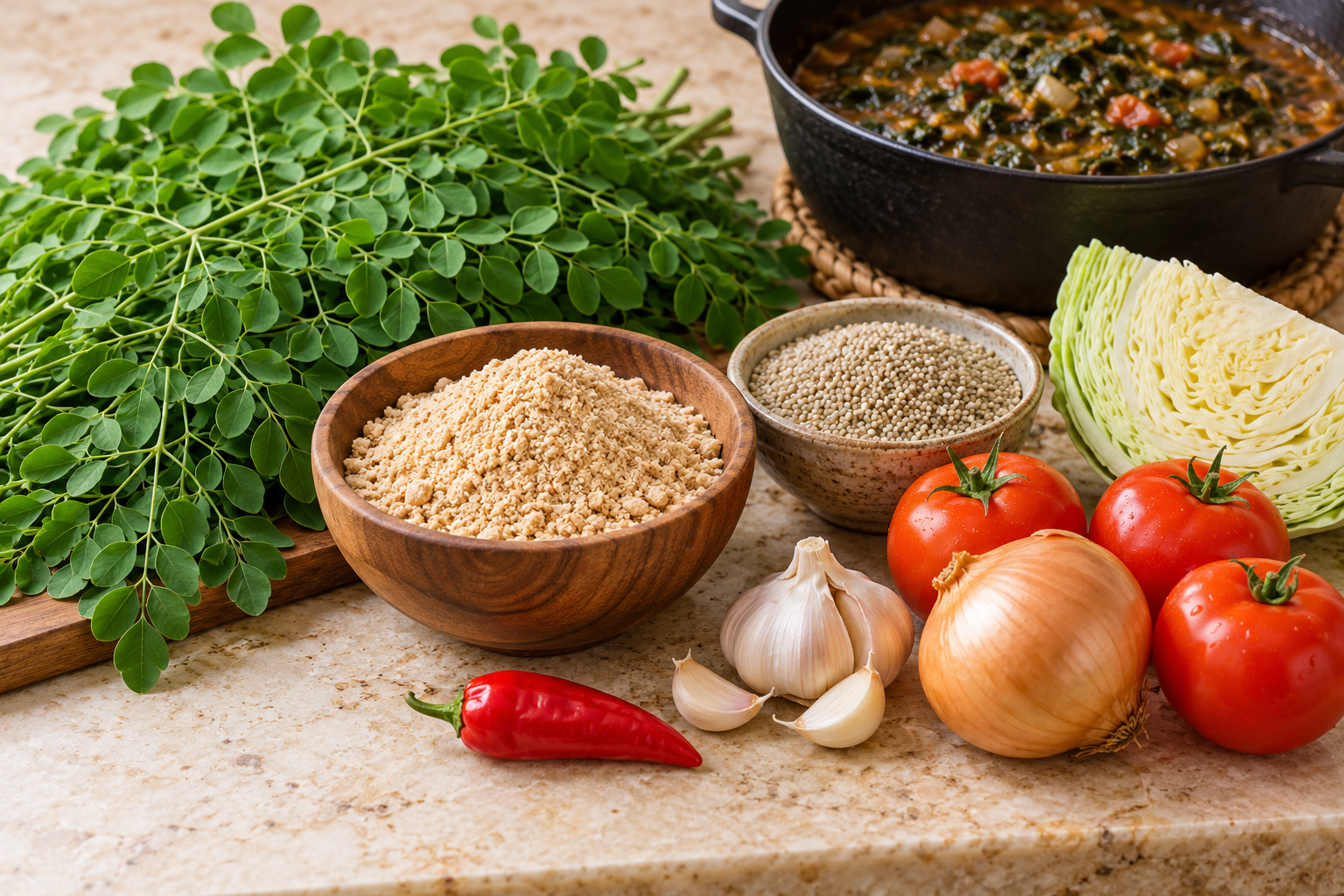
In Senegalese cooking, moringa can be much more than a drink. In versions of thiéré ak mboum, the leaves are cooked into a sauce with ground peanuts and served with millet couscous. Recipes differ between households and regions. Meat, preserved fish, cabbage, tomatoes, onions, garlic, and chili may also be part of the pot.
It is a useful reminder that moringa is a food ingredient with a culinary history. The leaves contribute character to the sauce, while peanuts give it body and a rounded flavor.
Our two Saafara Kitchen adaptations offer different starting points: Smoked Turkey Mboum and Vegetarian Mboum with Black-Eyed Peas. Serve either with Senegalese millet couscous, Moroccan-style couscous, or white rice.
3. Add leaves to soups and simmered dishes
Think of moringa leaves as another leafy ingredient to cook with. Fresh leaves can be washed, stripped from tough stems, and cooked until tender. Dried leaves need time and liquid to soften. Follow the recipe and your product’s instructions rather than treating dried leaves like a ready-to-eat garnish.
For an everyday kitchen experiment, try a small amount in a vegetable soup, a tomato-based bean stew, or a lentil dish. Start modestly so the earthy flavor complements the rest of the meal.
4. Cook a simple vegetable side
Moringa leaves can also be cooked like other leafy greens. Onion, garlic, and a little oil make a simple starting point. Add prepared leaves and enough liquid to cook them through, then season to taste. Serve beside rice, fish, beans, or a vegetable meal.
These are serving ideas for your own kitchen, rather than a claim that every preparation is a traditional Senegalese dish.
5. Explore powder for blending and baking
Moringa powder is made from finely ground dried leaves. It behaves differently from whole leaves: it disperses into a mixture instead of leaving pieces to strain out. That makes it an option for cooked soups, doughs, and baked goods.
For a first baking experiment, choose a recipe designed for moringa powder. Adding too much can change both flavor and texture. Powder is not a direct spoon-for-spoon replacement for fresh or dried whole leaves in mboum.
6. Blend a moringa smoothie
Finely ground moringa leaf powder is easier to blend than loose leaves. Try it in a smoothie with banana, mango, pineapple, or a creamy yogurt base. These are flavor-pairing ideas for your own kitchen. Begin with the serving guidance on the product label and adjust the other ingredients to taste.
Choose a food-grade powder labeled for this use. Do not assume every dried leaf product or supplement is intended to go straight into a cold drink.
7. Make a powder drink or latte
Tea and a powder drink are different preparations. With an infusion, the leaves are steeped and removed. With a powder drink, the finely ground leaves remain in the cup. Whisk a suitable moringa powder into a little liquid first to reduce lumps, then add the rest of your water, milk, or plant-based milk according to the product’s preparation directions.
A warm moringa latte is another kitchen idea, with cinnamon or vanilla to complement the green flavor. Moringa powder is ground leaf, so it may settle rather than dissolve completely.
8. Understand the capsule format
Moringa is also sold as a dietary supplement in capsules, including products containing dried leaf powder. Capsules offer a format for people who prefer not to taste the leaf, but they do not provide the experience of a tea or a meal.
Products can contain different amounts of leaf powder or concentrated extracts, so a capsule is not automatically equivalent to a spoonful of cooking powder. This overview describes the format and does not announce a Saafara capsule product. Follow the specific supplement label; questions about suitability alongside medicines belong with a pharmacist or healthcare professional.
Choose the format for the occasion
- For tea: whole or cut dried leaves in an infuser, strained after brewing.
- For a leafy sauce: fresh leaves or rehydrated dried leaves, cooked according to the recipe.
- For blending into a dish: finely ground leaf powder, used in an appropriate recipe.
Keep dried leaves and powder tightly sealed in a cool, dry place, and follow the storage guidance on the package. Whether you begin with a cup or a cooking pot, moringa offers several ways to bring a familiar West African ingredient to your table.
Explore Saafara Kitchen · Shop Moringa Powder du Sénégal
Further reading: Agrosaafi’s thiéré mboum recipe; Feedipedia’s moringa food-use overview; Research on moringa leaves in food preparations, indexed by FAO AGRIS.