
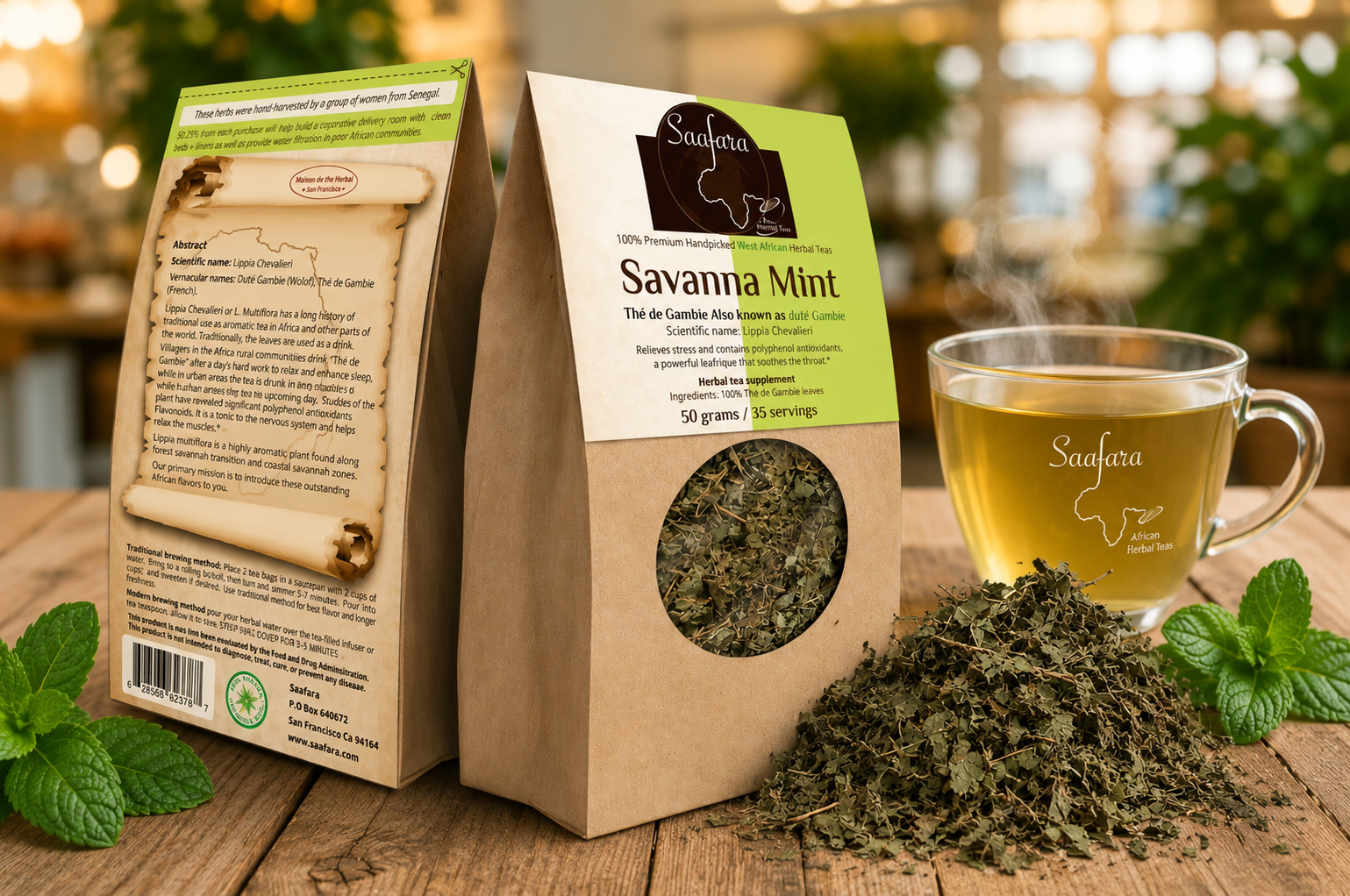
Description
Discover Savanna Mint
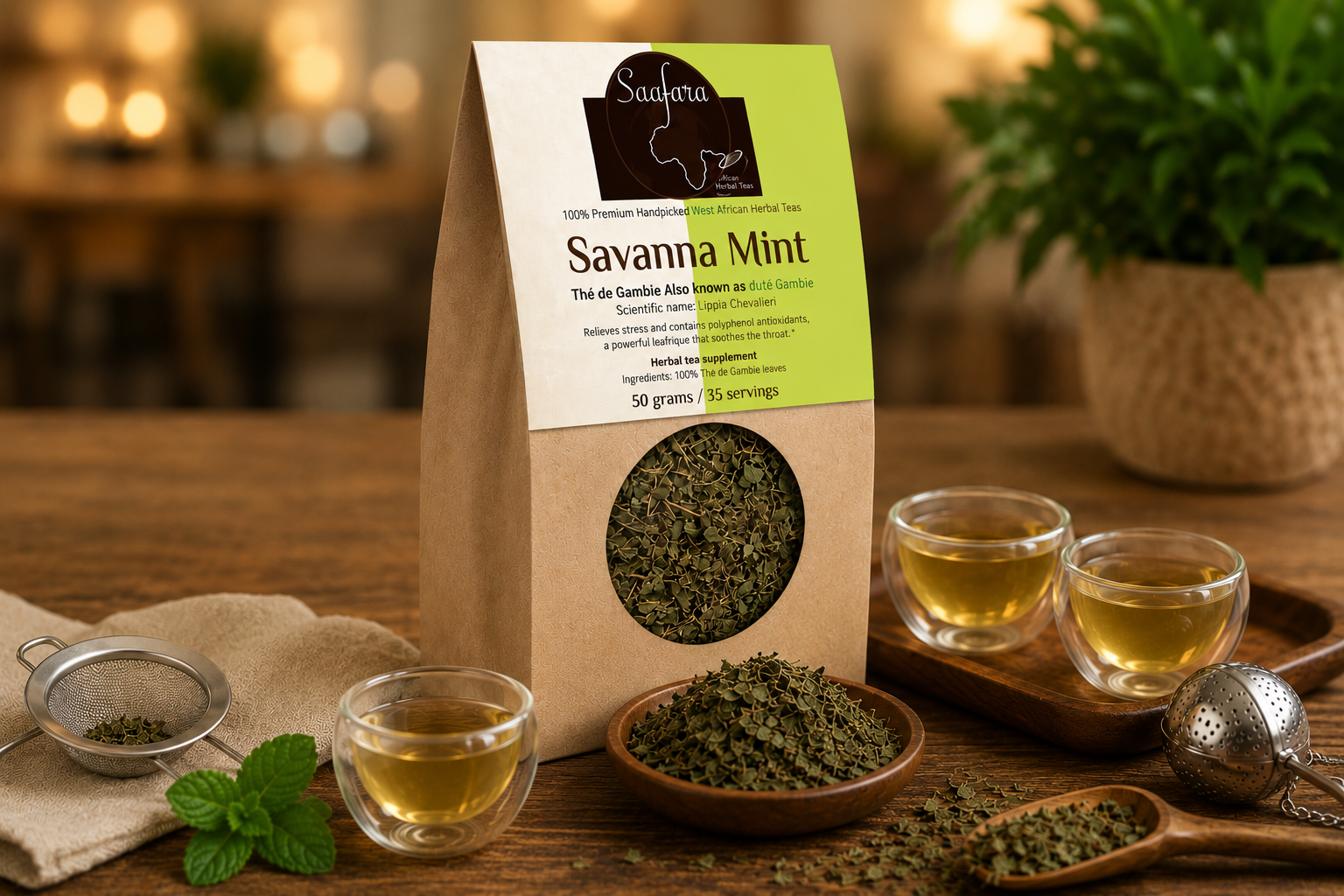
Savanna Mint herbal tea (Lippia chevalieri) is an aromatic West African herbal infusion. It has a refreshing, smooth character. Traditionally known as Thé de Gambie, this distinctive herb has long been prepared as a fragrant hot beverage across West Africa.
Naturally caffeine-free, Savanna Mint is part of our Caffeine-Free Teas collection. It offers a pleasant herbal aroma and a smooth, soothing cup. Traditionally, it is enjoyed after a long day to relax and unwind. It can also be enjoyed in the morning for a refreshing start.
A West African Herbal Tradition
Lippia chevalieri is closely associated with the Lippia multiflora group. It grows in the savanna and transitional regions of West Africa. Its aromatic leaves have a long history of traditional preparation as an herbal infusion.
In traditional use, Lippia preparations have been described as a febrifuge and used to soothe the throat. The plant naturally contains polyphenols and has also been studied for its antioxidant properties.
Savanna Mint herbal tea offers an approachable introduction to West Africa’s herbal traditions. It is especially inviting for customers discovering this herb for the first time.
Taste & Aroma
Aromatic • Herbal • Refreshing • Smooth
Savanna Mint has a distinctive, fragrant herbal character. Enjoy it on its own or lightly sweetened. Serve it hot for a comforting cup or chilled over ice for a refreshing herbal drink.
How to Brew
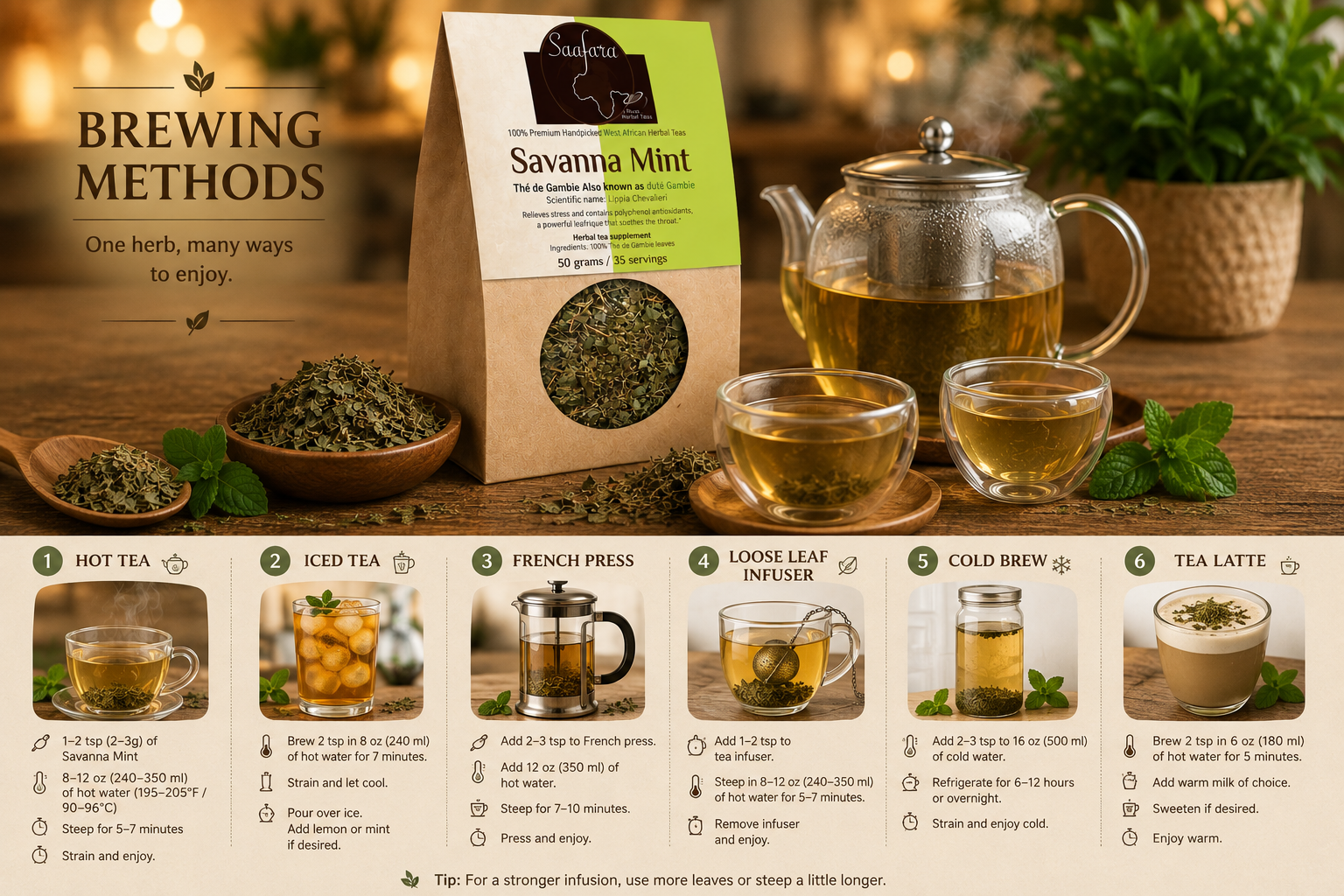
Use approximately 1–2 teaspoons of loose leaves per 8 oz (240 ml) of hot water.
Steep for 5–7 minutes, then strain and enjoy.
Add honey, sugar, lemon, or your preferred sweetener if desired.
Enjoy hot or iced.
Ingredients
100% Lippia chevalieri leaves
Naturally caffeine-free.
Origin
West Africa
Traditional Names
Thé de Gambie (French)
Duté Gambie (Wolof)
Explore More from Saafara
Enjoy Savanna Mint on its own, or discover its aromatic character blended with Sehhaw in our Sehhaw Wild Mint Infusion.
Traditional uses described are provided for historical and cultural information and are not intended to diagnose, treat, cure, or prevent any disease.